
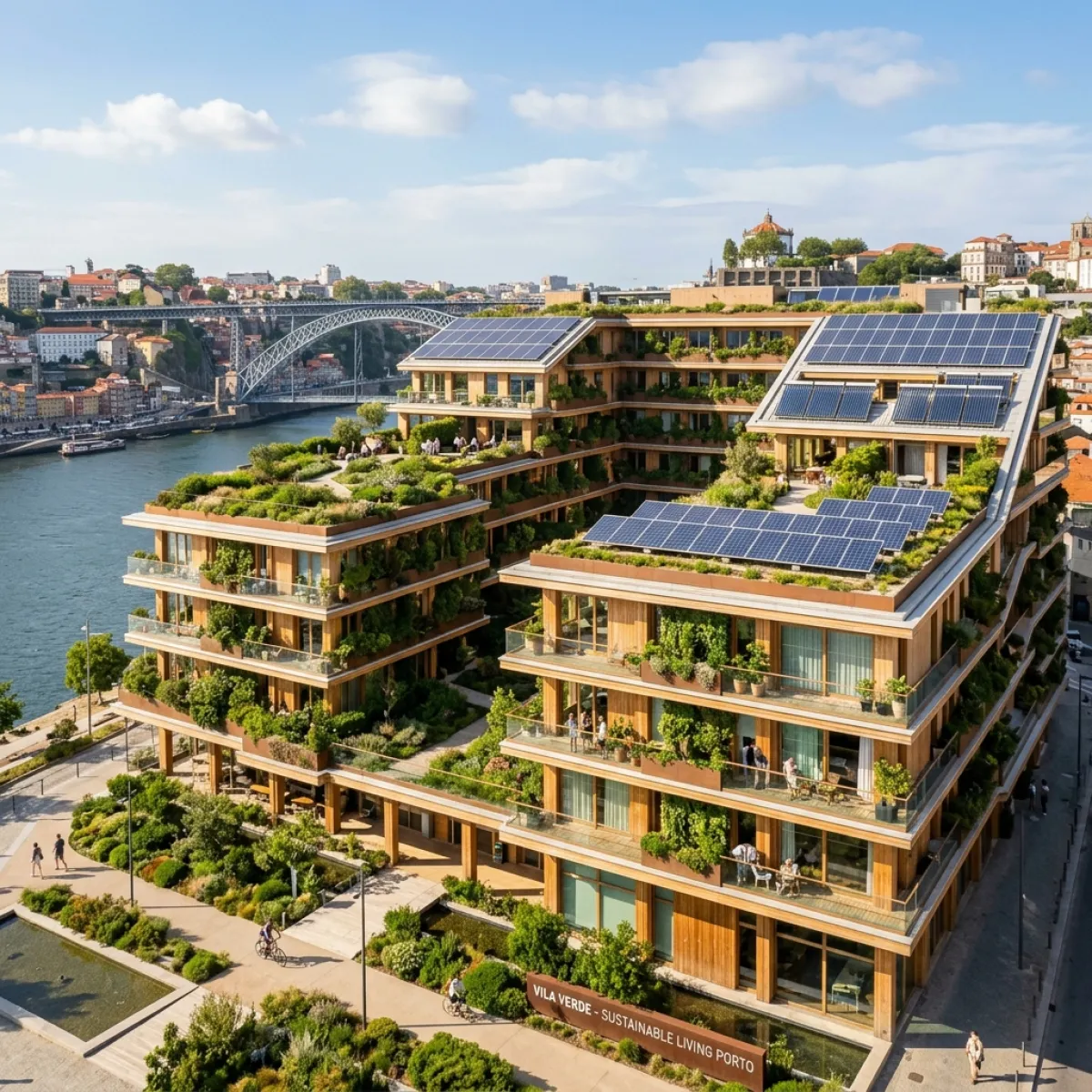
Sustainability, ESG, Decarbonization, and New Urban Models in Portugal
Sustainability in civil construction in Portugal has definitely left behind being an abstract or real estate marketing concept to become a legal, financial, and regulatory imperative. The convergence between European Union requirements, new bank financing criteria, and demographic changes is redefining the rules of the game in the building and infrastructure sector.
Companies that lead the green and digital transition will have priority access to capital and public tenders; those that resist will face progressive exclusion from the market.
1. The European Agenda: CSRD, ESRS, and the DNSH Principle
The European regulatory framework imposes strict transparency regarding the environmental and social impact of all construction activity:
- CSRD Directive and ESRS Standards: European sustainability reporting standards (European Sustainability Reporting Standards) require companies to demonstrate their ecological footprint. Although direct reporting primarily impacts large corporations, the impact cascades down to the entire supply chain: major developers and builders demand environmental data from SMEs and subcontractors to comply with Scope 3 Emissions reporting.
- DNSH (Do No Significant Harm) Principle: No work financed by community funds can harm the EU's environmental objectives. In practice, this forces at least 70% of Construction and Demolition Waste (CDW) produced on site to be sorted and directed for reuse or recycling.
2. Decarbonization, EPBD, and Zero-Emission Buildings (ZEB)
The goal of carbon neutrality by 2050 (with ambitious intermediate targets for 2030 and 2040) has in the revision of the Energy Performance of Buildings Directive (EPBD) its main legislative arm:
To achieve these goals, the Portuguese industry focuses on incorporating low-carbon materials (decarbonized cement, recycled green steel, and engineered wood) and measuring the embedded carbon footprint from the preliminary study phase.
3. Portugal as an Energy Vanguard and Circular Economy
Portugal benefits from an enviable position in the global energy transition. The electricity consumed in the country is mostly generated by renewable sources (hydro, wind, and solar), consistently exceeding 70% to 80% of the national electricity mix.
This clean energy matrix offers the construction sector a direct competitive advantage:
- Worksite Electrification: Transition of heavy machinery powered by diesel to electric or hydrogen equipment, and the use of temporary storage batteries supplied by solar energy on site.
- Buildings as Energy Plants: Modern projects cease to be mere consumers to become "prosumers" (producers and consumers), integrating photovoltaic panels, collective self-consumption systems (ACC), and renewable energy communities (REC).
4. Urban Rehabilitation, Demographics, and Accessibility
The demographic profile and Portuguese urban fabric impose two strategic priorities:
Sustainable Rehabilitation
Rehabilitation of buildings remains one of the most dynamic pillars of the sector. Instead of full demolition, intervention in existing buildings preserves built heritage and avoids the massive emission of carbon associated with producing new materials. The current challenge is to combine architectural preservation with updating thermal, acoustic, and seismic performance.
Population Aging and Senior Living
With one of the oldest populations in Europe, the real estate market in Portugal registers a growing demand for adapted projects:
- Universal Accessibility (DL no. 163/2006): Design without architectural barriers, adapted elevation, and home automation.
- New Asset Classes: Growth of Senior Living developments, assisted residences, and continuous care units, requiring specialized technical construction standards.
5. The Impulse of the PRR and Portugal 2030
The injection of European capital through the Recovery and Resilience Plan (PRR) and the Portugal 2030 program continues to act as the major investment engine in the public and social sector:
- Affordable and Publicly Supported Housing: Programs like 1.º Direito (1st Right) and the Urgent Housing Accommodation Stock finance the construction and rehabilitation of thousands of homes across the country.
- Efficiency Requirement: All funds allocated to housing and public buildings require energy efficiency levels higher than the national minimum standards, accelerating the modernization of contractors and suppliers.
Conclusion
The future of civil construction in Portugal is being drawn at the intersection of environmental responsibility (E), social and demographic impact (S), and rigorous governance and legal compliance (G).
Developers, builders, and designers who integrate ESG criteria, the ZEB standard, and circular economy in their daily operations will guarantee access to bank financing, attraction of international investors, and leadership in the real estate market in the coming years.